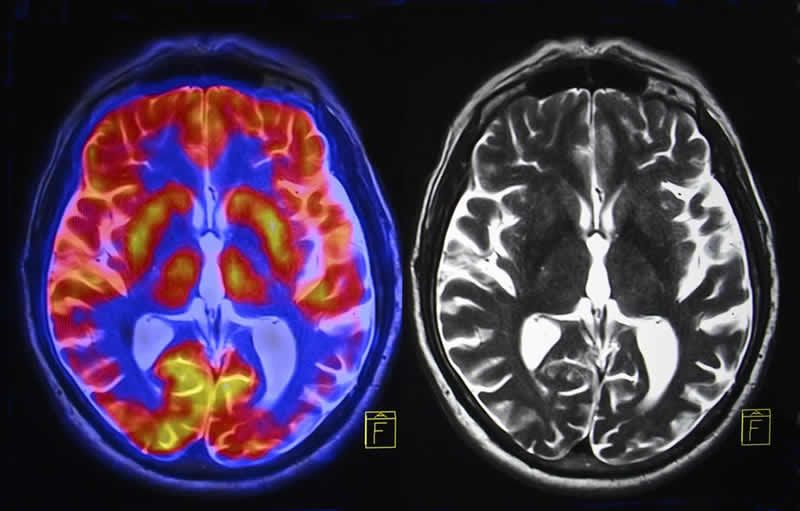
Chronic stress can effect hormones in the brain, including cortisol and corticotropin releasing factor (CRF). CRF coordinates fight/flight/freeze responses, related to anxiety, cognitive changes, and emotional regulation.
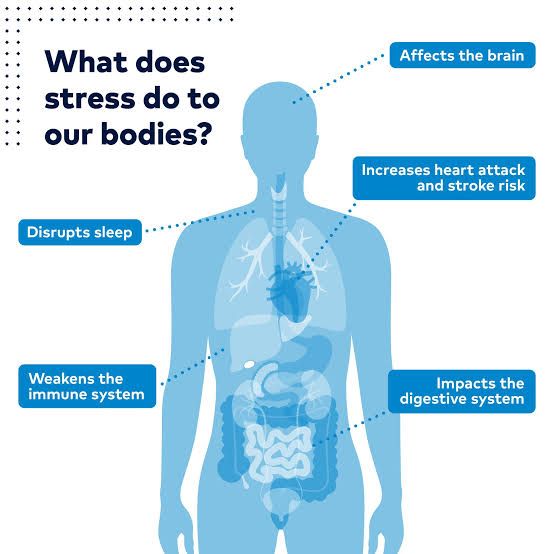
This is your body under stress. It affects all systems of the body including the musculoskeletal, respiratory, endocrine, cardiovascular, gastrointestinal, nervous, and reproductive systems
Memorial Health medical centre
It’s a stressful time at time of writing, in a fuel crisis, multiple international wars, a stressful government in many countries for any leftie like me, including here in Aotearoa.
These conditions are associated with stress:
***PLEASE see a doctor if you experience any of these and they are worrying you or your family members and contact emergency numbers as and if needed***
Anxiety,
Behavioural issues
Depression,
Heart disease,
High blood pressure,
Inflammation,
Digestive issues,
Headaches,
Fertility,
Sleep disorders,
Weakened immunity,
Skin conditions like eczema
Can worsen existing diseases, such as diabetes and arthritis,
So what can we do to reduce stress?
Or more importantly, what can we do to mitigate the effects of stress if we still need to interact with a very stressful world?
1) Time with nature
Salt and Wood eatery Waikanae
Go to a cafe and photograph or sketch some greenery. Grow a plant. Visit a forest. Sow some seeds. Go forest bathing. Bring a seat, a wheelchair, a walking frame to somewhere with birds and trees and listen. Walk by the beach and make friends with some cute dogs.
Look at pictures of trees if you’re stuck in hospital (as I am as I write this). It has been found to chill you out!
2) Time with friends and family
Connect with people around you who you feel comfortable with, such as family, friends and/or neighbours. I get it, family can be stressful. Chosen family is also important. If you need boundaries from toxic or manipulative people in your life, set those boundaries.
When you are under stress, relaxing and interacting with other great humans can help reduce the feelings of stress.
If you feel isolated, start creating a routine to talk to a regular bus driver, caffeine addiction attendant (barista), colleague or neighbour for a few times each week.
If you are a busy and unwell human like me (with my own inflammation condition endometriosis), get dates for hanging with friends in the diary and reschedule as health allows. Do NOT stress if people get angry about you rescheduling due to health. Find different less angry friends.
There’s someone out there for you to be friends with, I just know it. If people like certain US presidents can make friends, you definitely can.
2) Gentle and cardiovascular exertion.
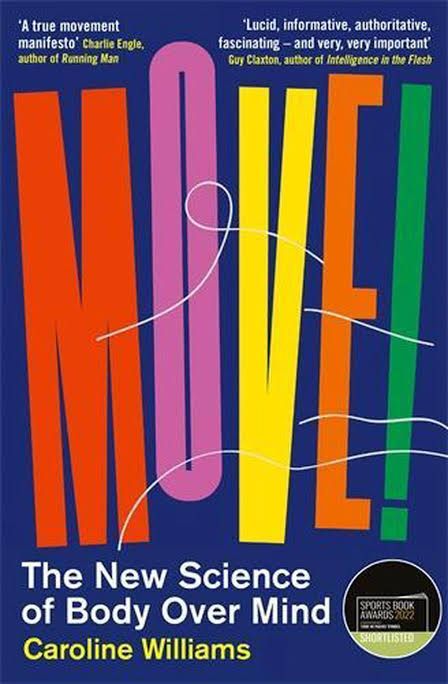
Exercise helps inflammation by leading to an anti-inflammatory response. Exercising can also increase neurogenesis (the production of new brain cells) in important areas. It also can improve your mood and cognition (thinking). Cool huh? I highly recommend this book to learn more.
Image provided by The Internet for educational purposes only
So you want to do better but don’t know how to change? Behaviour change takes a multidisciplinary approach.
If you want better mental health, start discussing with your GP, psychologist and/or psychiatrist as applicable. If it’s a mental health emergency for yourself or anyone else, dial an emergency number of your country.
In a work context, some people will change behaviour by reading a policy, completing an e-learning, attending a course.
Most people learn by practicing new skills, discussing learning with peers, reflecting on what they are doing differently.
Leadership training with a multi-disciplinary approach can be life changing. Facilitators and master course designers like Laurna Munro and Jemma Brunton can change your leadership journey.
So much of the change is up to you – do you use the skills you are learning? Do you carve time in your busy schedule to reflect? Do you bring up a regular time to discuss with your leader, or coach, or debrief with a personal supervisor?
Do you pay and invest in yourself and your own learning?
Learning is not easy. Humans are complicated, and as adults our behaviour is tricky to change.
Fortunately we live in 2026 so know lots about the human brain (I do wish we had studied women’s health as much as we had studied the human brain at this point in civilization).
Empathy, teamwork, leadership of self: these categories of emotional intelligence are how we’re going to navigate a changing world with kindness and learning.
Breaking any sort of behaviour down into categories comes with all sorts of difficulties.
Categories assist our brain to make quick sense of lots and lots of stimuli. It’s easier for us to categorise, say, ‘people on LinkedIn are looking for a new job’ and ‘people on Instagram like pretty pictures’ because trawling through every social media platform and interacting with every type of human would be exhausting.
It’s easier for brains to stick to categories, then we can just stick to the same types of stuff (and unfortunately, the same types of people) we know and like.
I guess bringing it back to the social media example, if your brain made the categorisation of “LinkedIn is for job-seekers”, the behaviour you may predict from me posting on LinkedIn is that I’m looking for a job.
Your brain uses a shortcut – a heuristic to assume something about me from my behaviour. I actually just love talking about emotional intelligence, I’m not job-seeking at all. Our short-cut-loving, lazy brains can be wrong a lot of the time. In this example, that’s not really an assumption that hurts my feelings – but lots of the time our assumptions are incorrect and unkind.
We can harness this preference of our brains to categorise in useful ways too. Mentally filing information as ‘work’, ‘fun’, ‘family’, ‘mental health tools’ can mean we can access important information quickly when we need to. I’d highly recommend every human to reflect what’s in their own personal mental health toolkit. We often don’t have the time to learn new stuff when we’re in crisis, after all.
Try using these emotional capability categories as a tool to assist a conversation with someone who is kind and unrelentingly honest about how you could work better with others (at home, or in a paid or volunteer position).
Even when things are tough (and we’re still in a pandemic, so things are still tough, if you needed reminding) I reckon it’s important to focus on what’s in your own locus of control and plan your own path to a fantastic future.
Anyway, hope you’ve enjoyed my wee earnest (so very earnest) post and you learn more about Daniel Goleman if you’re not already aware of his emotional intelligence work!
I am about to finish up at one workplace and start at a new one. My aunt is very sick, and I’ve spent three wonderful days at home down in the South Island, supporting my large extended family in whatever way I can. I’m very grateful to live in the modern world where some of this work and life support can be remotely, by video or phone call, or email or text message.
I had not really thought about the importance of video call prior to the pandemic. It’s a great way of checking in, seeing how someone is doing and providing support. It’s a very beautiful thing when you’re feeling a bit under the weather and you get a video call from a loved one. I try to use it in non-invasive and supportive ways (tricky when you’re a talkative extrovert!).
Endings and beginnings – these are big times in life. The end of a chapter and the start of a new one, or sometimes the start of a whole new book! Trying new things can lead to all sorts of insights about yourself, your drivers, your goals and who you want to be ‘when you grow up’.
I’ve always said when I want to grow up, I want to be happy. At the age of 38, I’m starting to realise what that means to me. I like a life with a balance of planning and spontaneity, lots of friends but time to myself for reflection, beautiful things around me and work which provides me with purpose. This is what I need to be happy. What do you need?
I think a lot about how to balance the spinning plates and how to keep all those ducks in a row (and those ducks keep quacking, and walking around, and having chats with other ducklings, and it’s all very cute but chaotic).
What if we don’t need to keep all the plates spinning? What if some of them fall and break, and that’s ok? What if we ask – which plates need to be spinning? Why?
What if we let some of those ducks have chats with the other ducklings, foster their growth in a disorganised, messy way, and ask the ducklings to have chats about what they learned?
What if we can coach people to realise what they need from work? From life? From this nonsensical idea of work-life balance (as if we could ever just turn off life to start working…)
This is a whole new systemic approach to organisations. Life is messy, business is messy. Mess is ok – let’s try for quick wins. Let’s make it safe to fail. Let’s support our people to be the best they can be, to be honest about their mental health, and what it means to be human.
I mean, I’m human… humans are pretty messy sometimes.
Article summary: let’s keep talking about inclusion while we address power imbalance in a structural manner.
I am a natural collector of things. Pets, friends, spices, cushions, vintage dresses – I want them all. Obviously I need to curtail my collecting for the benefit of paying our mortgage, and also for getting sleep (in my late 30s I am finally acknowledging I am someone who needs 9 hours kip to truly look after myself, and that means quiet evenings and fewer cats* to wake you up during the night). However I will always keep collecting peer reviewed scientific articles, and well-written and/or innovative links, for the rest of my life.
Today, if you wish to read them, I will share some of them with you. You can even scroll down right now and see what piques your interest – I don’t mind. After the links I give my two cents on how to embark on an Inclusion and Diversity journey.
You may or may not have noticed from my LinkedIn, I love peer-reviewed articles. I studied Chemistry and Psychology (Psych would have been my minor, if we had minors in NZ science degrees back in 2001). One day I will do my Masters in Organisational Psychology, and that will be a fun time for me, because I love peer-reviewed articles.
My raison d’être (reason to be) and my rapunga whakaaro (philosophy) is to keep always learning. My Gallup Strengthsfinder key strengths are learner, positivity, maximiser (I like to make projects go from good to great), developer (of people), and…. input. I collect things. I collect new concepts, novel artifacts, and different paradigms.
The internet makes us all pretty lazy. We’re always looking for the next cat gif, the next joke, the next shocking story about someone who was being silly and doing something we would NEVER do (there are psychological reasons for this, including perceived scarcity of time, and scarcity makes people act weird). We titter, share, move onto the next entertaining moment of our life.
Psychology, and specifically organisational psychology, suggests that underpinning all these entertaining moments we can, and I would argue should, focus on personal, organisational and structural change. I believe this with every molecule of my being – which is why I am sharing these links with you today. I won’t even ask you to pay me an hourly consultant rate to share this knowledge.
Some of these links are specific to a New Zealand context, but all of these links are worthwhile reading. Some may help you argue your point in a boardroom or a business case, some may be more suited to sharing with your organisational leaders, or policy-makers. You may even be able to learn enough to change careers to being a diversity and inclusion specialist, if you’re also a good writer, and a decent facilitator. We need more of us. If you are an Inclusion and Diversity specialist, reach out. I would like to chat.
These links are stacked with policy first, because evidence suggests structural changes have a far lasting effect than unconscious bias training. I’m all for a conversation about historical power imbalances, but that isn’t unconscious bias training. Teaching people the human brain is biased without any strategies to address this at a structural level, is a waste of time and money. Start with your policies, your parental leave, your domestic violence policy (does it exist?), your flexible work policy.
Above all, revise your recruitment strategy and make sure ALL your job ads have inclusive language AND salary banding if at all possible. Those of us who aren’t historically in the ‘pale, stale, male, colonisalist’ camp (sorry white men), don’t know how much we’re worth. If you give us a salary band, we can say what we think we should get paid. Pulling a number out of thin air isn’t fair, and you’re going to need to spend a bunch of time standardising salaries at some point in the future when you realise you’re paying people a bunch of different sums for doing the same job.
Why not just have the contractor rate, salary value, or salary band on the job ad from the very get go, and only pay within the band – no negotiating?
After all of that, I would recommend working with a change project manager to nut out how you will start a conversation about power imbalances in society, and at work. Speaking power to truth. This is true facilitation, and you will need a facilitator with a strong background creating safe psychological spaces (see Amy Edmondson’s work in this field).
I have designed training that works to start a conversation. None of this will be fixed if we just talk about it forever.
If you found any of this helpful, please let me know on my LinkedIn.
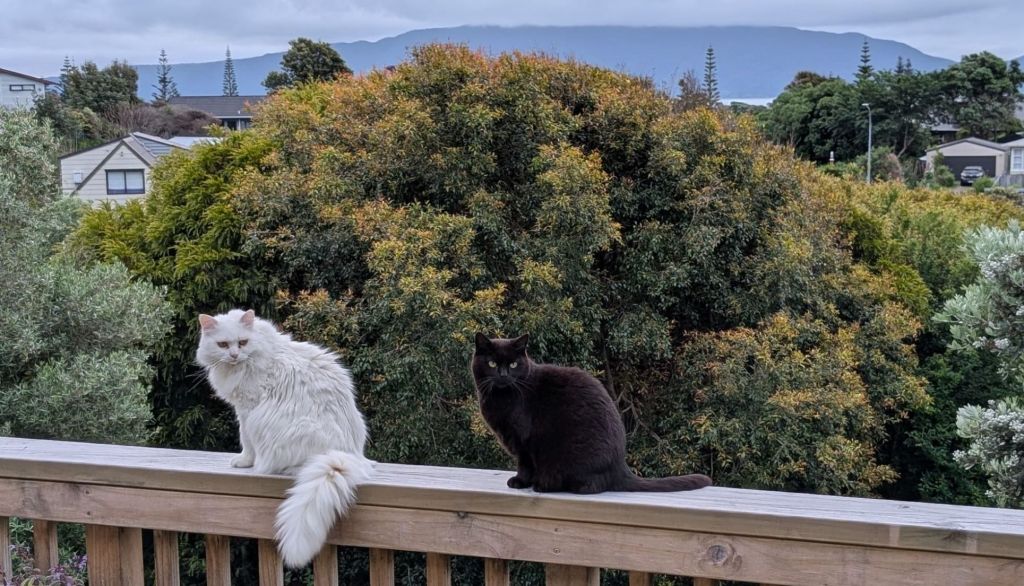
* Please note, I said less cats, not no cats. We currently have two beautiful rescue cats who we love wholeheartedly. If you can adopt a shelter cat, please proceed to do so as soon as possible. You will not regret it. If you can’t adopt a pet, why not volunteer at your local shelter?
Organisations are putting a lot of impetus on employees to manage our individual stress. This is important! Psychological science shows clear links that creating clear relationship boundaries, getting outside, eating well (without too much focus on diet culture), talking to professionals (hello employee assistance counselling programmes!), exercise and managing consistent sleep patterns assist to reduce stress. But is it better to put employees on another round of stress management courses, or is best practice to also to address structural imbalances that lead to stress?
I’m not sure if you’ve heard of The Systems Thinker, but I’m a huge fan of this publication. In fact, if you have limited time – just go read this article right now. If you’re still here, and you want to keep reading this particular piece, here’s a summary – Coleen Lannon suggests some structural approaches to managing employee stress could include:
Keeping a small, stable, primary work group,
Formalised structures for regular time off (for example, a four-day or five-day working week),
More holidays / paid time off work,
Delegating tasks with a clear purpose and understanding of the skills needed,
Discouraging ‘workaholic’ environments from the very top level of organisations (this may involve being very disciplined with the amount of work that is agreed upon by the organisation by senior management, and in corporate environments, may effect directly effect revenue).
In a study “Stressors, withdrawal and sabotage in frontline employees: The moderating effects of caring and service climates”, researchers Feng-Hsia Kao, Bor-Shiuan Cheng, Chien-Chih Kuo and Min-Ping Huang examined the relationship between social stressors in frontline environments and quantifiable employee behaviour related to stress. This is the big stuff that Human Resources professionals try to reduce – employee turnover (people quitting), and high levels of sick leave. We want people to take sick leave when they’re sick, but it’s even better if they don’t get stressed and sick in the first place – but sometimes people just get sick regardless. Basically it costs a whole bunch if an organisation needs to spend heaps recruiting people, and when lots of people leave it causes institutional knowledge to disappear. The study suggested creating a caring climate and examining social stressors could reduce employee turnover and sick leave levels – nothing surprising there.
World Health Organisation’s booklet Work Organisation and Stress has some interesting ideas about structural approaches to stress management. It distinguishes between pressure and challenge and stress, which is important. Challenge keeps us motivated, makes us work harder and stay more alert. Stress, on the other hand, could come from when the pressures at work are too high, or it could come from when an individual’s knowledge and abilities aren’t utilised (or at least, if the employee perceives this as so). This makes it extremely important for leaders to manage to outcomes, and to clearly explain to their team members that they have been chosen for particular tasks due to their proficiency or desired growth in a particular area. If a leader explains to me that they’ve chosen me to complete a task because I had previously identified I want to learn how to do that sort of thing in the past, I am more likely to perceive any challenges as learning opportunities. If I’ve been assigned a task without any explanation, the assignment will seem random and my motivation to complete it may be reduced.
The most interesting thing about the World Health Organisation booklet to me, is that the way we design teams can cause work stress. Team members need to feel like they have a choice in the tasks they complete, and the demands of work need to be matched to the knowledge and ability of workers. I guess this is where mentoring and small sub-teams can really come into their own. If a team member is lacking in a certain skill, they can be matched with a mentor who has the existing capability to complete a task or project. This has the added benefit of increasing leadership ability in the mentor, and increases the perception of support across the team. If these matches are made outside of existing formal team structures, even better – the perception of support is increased across the whole organisation.
Shift patterns, too many meetings, not enough meetings, too many emails, not enough emails about important topics, loud and intrusive work environments, too quiet work environments, people eating eggs or tuna at their desk (ok maybe that’s just me) – there’s a lot that can stress people out at work. I should know, I score very highly on the HSP psychology test. It’s important for me to set my own boundaries, which sometimes means working alone in a meeting room, from home or even a cafe if I need to meet a deadline. That’s within my own circle of control. There are also important structural considerations that senior leaders and all people managers (in their particular circle of control) can implement that will have a positive influence in all of our work lives.
From an organisational culture point of view it is important to acknowledge the emotional needs of staff and take a systems-thinking approach to managing any structural stressors that may be in play. 2020 was a stressful year. Let’s ensure we’re protecting and empowering our people to make 2021 a beneficially challenging year.
* I would argue the more reliable metric here is the ability of employees to feel COMFORTABLE to be able to bring their whole self to work, as no-one needs to see casual, opinionated weekend Saturday night Anna on a Monday morning, right? But it’s nice to feel comfortable enough at work to talk about your sexuality, to individualise your dress sense within dress codes, and to have a joke with your workmates in a kind way within the realms of a Code of Conduct.
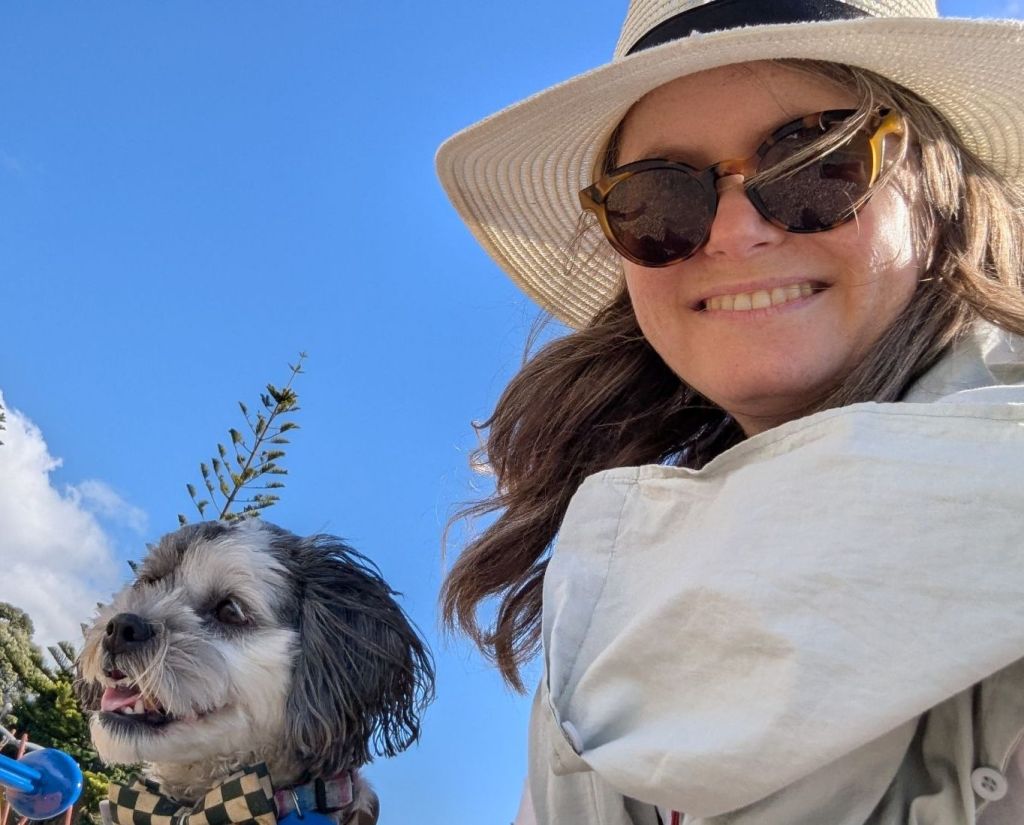
About me: Anna Wilson-Goldman is a learning and organisational development professional from Aotearoa, New Zealand. She has three cats, a tiny dog, three chickens and one civil union partner. When she’s not practicing mindfulness meditation or working, she’s in her garden.
There are so many wellness articles written in 2021. So why write another one? Well firstly I love to write, and I find myself at almost 40 years of age with no permanent employment but enough opportunities and privilege (sometimes known as wealth) to spend time writing and building my own projects. I have no children, own a house almost outright with my partner. I can easily afford to travel New Zealand to visit friends and family. Other than a few Delta variant COVID hot-spots at the moment, some of us are privileged enough here in New Zealand to still travel a lot of the country (sorry for people in Waikato, Northland, and Auckland who are currently in lockdown). For me, life is pretty good right now.
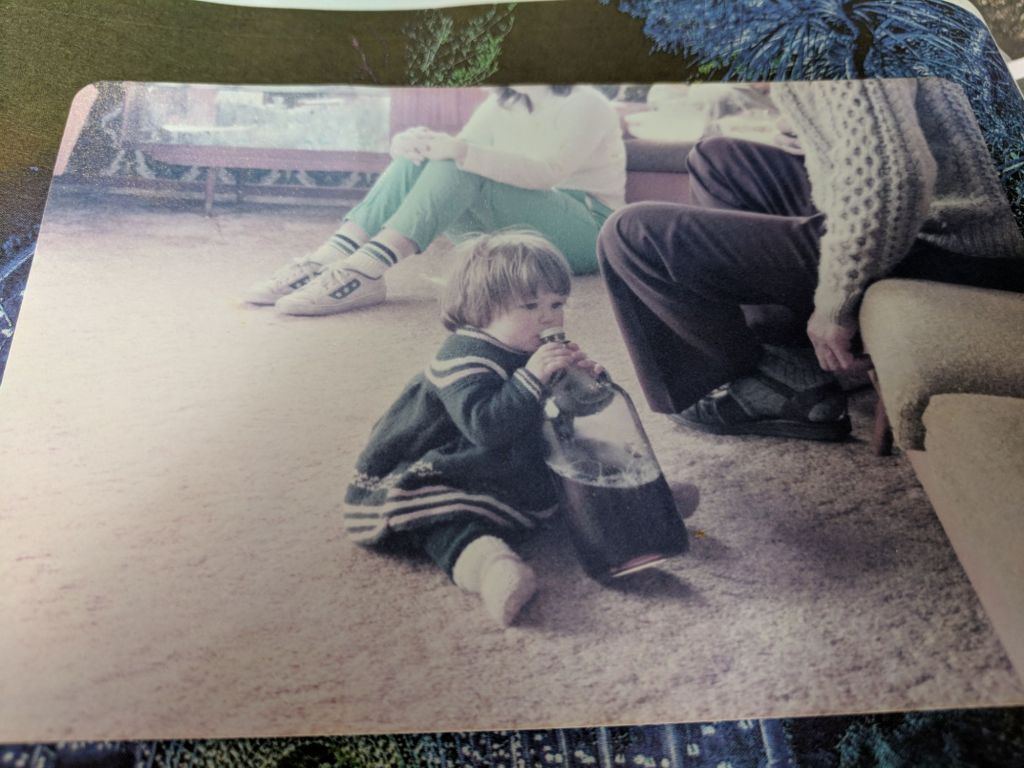
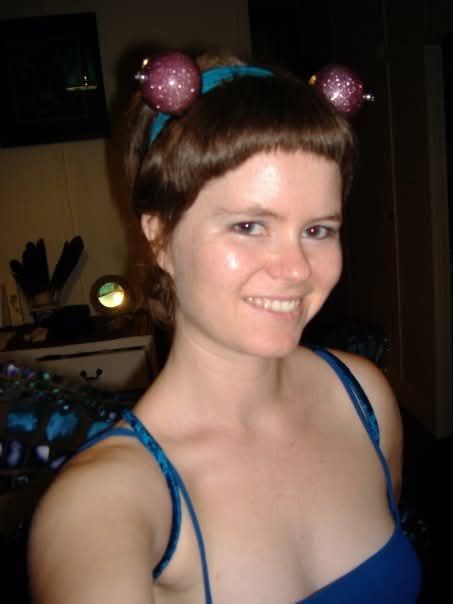
No, I don’t really understand what is going on here either. Great haircut though, small Anna.Anna circa age 26 – tiny baby with a terrible haircut
I was born in 1982 in Otautahi (Christchurch), in the South Island of New Zealand. I was raised with a mum and a dad, a bossy and wonderful little sister, surrounded by extended family and the natural beauty of Aotearoa New Zealand. We went skiing, I learned about dinosaurs and grew herbs, hung out with a series of beautiful family cats, and attended the fanciest public high school in town. Life was still pretty good!
I experienced failure pretty early in my career.
I attended Auckland university in 2001 dead set on getting into optometry school. After three A grades in my first year I failed an interview to get one of the 30-odd slots available to study eye science the next year. I will always remember the judgemental face of the young woman on the panel who stared at me with disdain and asked me “well if you want to help people, why don’t you just study nursing?”. I wish I had taken her up on that – nurses are great!
I now know that what illustrious interview panel wanted me to say was that I was fascinated with the physics of light and prisms, had done my first project at intermediate school (age 11) on myopia, and I was excited to join their very fancy club. I didn’t know I was meant to say those things, although they were all true – and just spoke of helping people. In hindsight the advent of OPSM and Specsavers, and online shopping has affected the eyeglasses industry greatly – I’m glad I didn’t get into your fancy optometry school. OK maybe I am still a little bit bitter.
From that very jarring early failure in life I went on to have many adventures. I completed my studies at Otago University and declined a Masters programme in Chemistry. I had no idea how necessary skills in environmental chemistry would end up to be, but I was reasonably sure I didn’t want contract work in a laboratory, and I thought I wanted to work with people in some sort of business role with science companies.
I chose to travel alone to Brazil at 21 to stay with family, completed a business diploma while working for a Russian shipping firm, then travelled to India. I lived and worked in Australia, made friends, worked in a variety of temp jobs as an office assistant, and navigated all the challenges of human relationships in my 20s.
When I failed at work, or in relationships, I spoke to my friends or family. I attended counselling for the first time in my mid-20s, and it was wonderful. At some point in my life, until then – I had got the very wrong idea that only the mentally unwell needed therapy.
I think I’m not the only one in my generation to find it initially hard to ask for help. I am at the very beginning of the millennial age bracket but I identify heavily with the digital generation. We were learning how to communicate our needs in a digital world in a time where therapy wasn’t for us – it was something the Americans talked about on TV. The internet really messed us up.
My kind father bought us our first Apple Mac (a LCII) when I was 11 years old. Other than playing a lot of black and white ninja Shareware games, I taught myself basic bulletin boarding and desktop publishing, and participated in reasonably early platforms that trialled internet communication, like IRC and web-based chat.
Me and my friends were privileged enough to get our first mobile phones aged 16. I had a One Touch View, which was a great phone other than having to memorise everyone’s phone number to input when I text messaged them. Early phones were definitely designed for the more extroverted American calling culture, but digital-adopting New Zealanders took to text messaging like ducks to water. When I grew up and went away to university to study psychology and environmental chemistry, I spent so much time in computer labs on chat programmes, I will forever have the ICQ “uh-oh” burnt into my brain. Life, love, gossip, we talked about it all, and we talked about it in written words.
In the early days of text messaging we spent so much time going down to the local convenience store to buy a voucher for more credits to text message our friends. Text messaging cost 20 cents a message, then 500 texts a month, then unlimited text messaging. Kiwis were massive fans of a communication platform where we didn’t actually have to phone someone and talk to them with our voices. Before lower case text messaging, and far before Tindr, so many relationships were started with those eternal text characters: “SUP?”
The problem with digital communication is it’s everywhere now, and it’s easy. It’s easy to flick off an email between meetings. It’s easy to message someone on Slack, or MS Teams, during a meeting, at 7am or at 9pm. Digital communication is making it difficult to remember many conversations at work need to be planned. We need time to plan things effectively. We have less and less time, because we think we need to spend more time finishing our task list. We will never finish our task list, because we keep adding to it.
I have almost ten years experience working with public and private sector teams and I have worked with a bunch of different managers. I haven’t tried my hand at managing a team, although I’d like to one day. Working in organisational development and leadership makes me very aware of my own shortcomings, and I don’t think I’m ready to lead teams just yet. But because I’m not in leadership teams yet, I think I can also clearly see where many companies are currently failing.
There are some amazing, strong, empathetic leaders. However, we’re not looking after our people. They’re hurting, for a multitude of reasons, and sending them on a course of how to manage stress isn’t going to solve everything.
Please note, as an aside – a psychological health course might help some people, combined with a strategic top-down, bottom-up plan to employee wellbeing. I’m more than happy to help, just ask me for some advice and I’ll put you in touch with an expert or three!
We need to take a holistic approach to assisting psychological safety in our complicated human organisations. I have a lot of ideas, but we need to create this holistic approach together, with people from all types of backgrounds, because one size does definitely not fit all. I’d love to hear your thoughts, experiences and opinions in the comments.


 Equity Inclusion Leadership